Key takeaways
- Textbook English is often correct but formal. Real English is shorter, warmer and more natural.
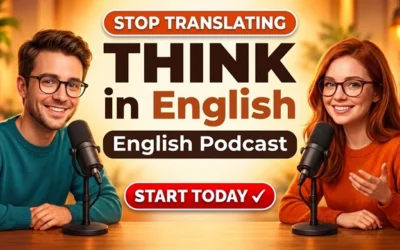
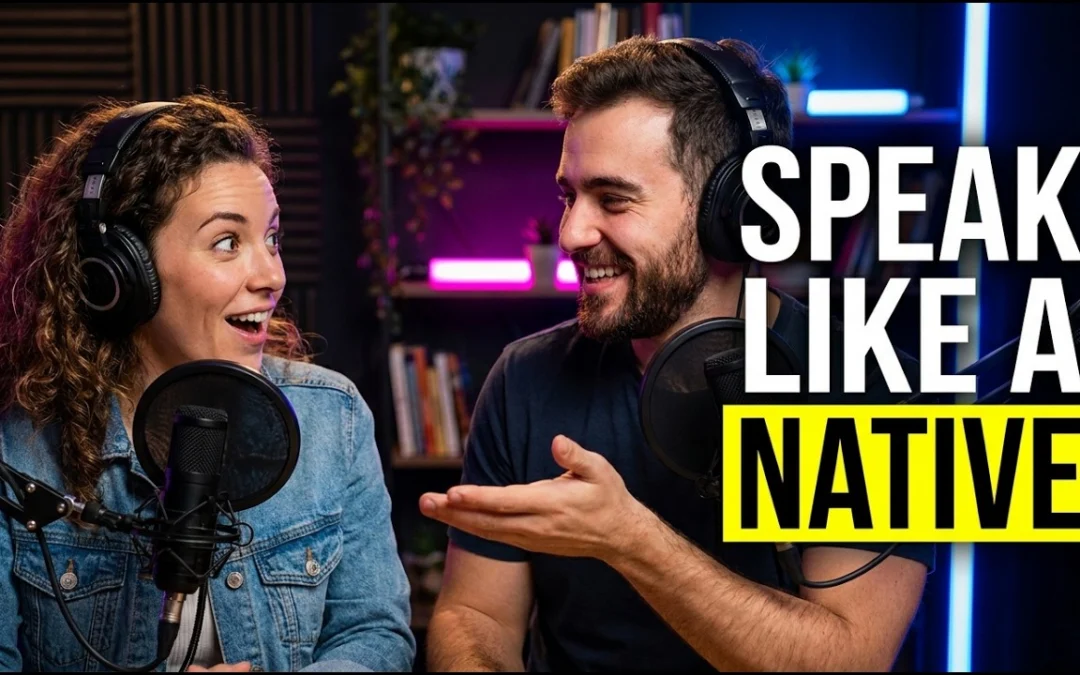
- In this podcast episode, Emily and Mike explain 10 everyday phrases: I’m in, totally, no way, tell me about it, let me think, that’s a good point, kind of, it’s not a big deal, anyway and I’ll let you go.
- Some phrases don’t mean what the words say. “Tell me about it!” usually means “I know, I feel the same.”
- Don’t try to learn all ten at once. Pick two and use them this week.
Have you ever said something perfectly correct in English, and the other person looked at you a little strangely? Maybe you said “Yes, I would like to participate” when a friend invited you for pizza. Nothing wrong with the grammar. It just doesn’t sound like a real person talking.
This happens to almost every English learner. School teaches us the full, formal version of the language. But in real life, people use short, friendly phrases that you rarely see in a textbook. The good news? These phrases are usually easier than the textbook version, not harder.
In this episode of the English Easy Practice Podcast, Emily and Mike go through 10 of them. Below you’ll find the episode, a quick guide to every phrase, and a few ideas to start using them right away.
Listen to the Episode
Listen once just for fun. Then come back here and read about each phrase. The second time you listen, you’ll notice how naturally the hosts use them.
Textbook English vs. Real English
Here is the difference in one table. Which column sounds more like you right now?
| Textbook English | Real English |
|---|---|
| Yes, I would like to join you. | I’m in! |
| I completely agree with you. | Totally. |
| Please give me a moment to consider. | Let me think. |
| Please don’t worry, it is not important. | It’s not a big deal. |
| I must end our conversation now. | I’ll let you go. |
If you picked the left column, don’t worry. That is exactly why this episode exists.
The 10 Phrases, One by One
1. I’m in
It means “Yes, I want to join.” “We’re going for pizza after work. Want to come?” – “I’m in!” If you don’t want to join, you can say I’m out or I’ll pass.
2. Totally
A short, friendly way to agree. “It’s so cold today, right?” – “Totally. I can’t feel my fingers.” Absolutely and for sure work the same way.
3. No way
Use it when you hear something surprising. “I just got a promotion!” – “No way! That’s amazing.” Your voice changes the meaning: said with big energy, it means “Wow!” Said slowly, it means “I don’t believe you.” Same words, different music.
4. Tell me about it
This one surprises a lot of learners. It sounds like a request for more information, but it usually means the opposite: “I know exactly what you mean, I feel the same.” “Traffic was terrible today.” – “Tell me about it. It took me two hours.”
5. Let me think
A small phrase with a big job. When you need a few seconds to find your words, don’t go silent. Say “Let me think” and the conversation stays alive while your brain catches up. This is a great habit if you often translate in your head before you speak.
6. That’s a good point
Use it when someone says something smart or useful. It gives you a moment to think, and it makes the other person feel good. Two benefits in one phrase.
7. Kind of / sort of
These mean “a little, not completely.” “Did you enjoy the movie?” – “Sort of. The beginning was great, but the ending was boring.” They make your answer softer and more polite.
8. It’s not a big deal
Say this when someone apologizes for something small. “Sorry, I’m five minutes late.” – “It’s not a big deal. Come in.” No worries and don’t worry about it have the same warm feeling.
9. Anyway
Mike calls it a steering wheel: it turns the conversation in a new direction or brings it back to the main topic. “…but that’s another story. Anyway, how are you?”
10. I’ll let you go
The polite way to end a conversation, especially on the phone. Instead of “Bye, I have to go,” you say “I know you’re busy. I’ll let you go.” It sounds kind, because it seems like you are giving the other person their time back.
Why Are These Phrases So Hard to Learn at School?
Because you can’t understand most of them word by word. “Tell me about it” and “I’ll let you go” only make sense when you hear them in a real situation. That is why listening matters so much: you meet the phrase together with its situation and its tone of voice. We explain this idea in Learn Phrases, Not Words.
So how do you make them stick? Try this:
- Listen to the episode two or three times. Each time, try to catch the phrase before the hosts explain it.
- Say the examples out loud. Copy the tone, especially for “No way!” and “Tell me about it.”
- Write one sentence about your own life for each phrase you choose.
- Use it for real. In a message, in a class, or with a friend.
Your Challenge This Week
Don’t try to use all ten. Pick just two phrases that feel natural to you and use them in a real conversation this week. Small steps, real progress. Then tell us in the comments: which two did you choose?
Want to hear these kinds of phrases inside real conversations? Our latest lesson, English Conversation Practice: Preparing for a Job Interview, is a good next step. And if you want daily practice you can take anywhere, the Shadowing English Speaking Course has 60 everyday conversations as MP3 audio and PDF text. You can try a free sample lesson first.
Frequently Asked Questions
What does “Tell me about it” mean?
In most conversations it means “I know, I feel the same way.” For example: “This week was so stressful.” – “Tell me about it!” It does not usually mean that you want more information.
How do I say no politely when someone invites me?
You can say “I’ll pass this time” or “I’m out, but thanks.” Both are friendly and natural.
Is “kind of” informal?
It is common in everyday speech and fine in most conversations. In formal writing, use “a little” or “somewhat” instead.
How can I remember new English phrases?
Hear them in context many times, say them out loud, and use two or three of them in real conversations. Using a phrase once in real life helps more than reading it ten times.