Key takeaways
- This video has two short lessons: a relaxed chat about weekend plans and a busy conversation at work.
- Weekend phrases: chilling, hang out, grab a bite.
- Work phrases: in the meantime, hang on, I’ll get back to you, hear from.
- Notice how the style changes: the same person can sound casual on Friday night and professional on Monday morning.
Do you speak the same way to your best friend and to your manager? Probably not. And that’s one of the hardest parts of English: knowing which phrases fit which situation.
This lesson makes it easy to see the difference, because it gives you two conversations side by side. First, two friends plan a lazy weekend. Then, two colleagues try to finish a report before a deadline. Seven useful phrases, two very different moods, and lots of speaking practice for beginners.
Watch the Lesson
Each lesson has its own listening, vocabulary, repeat, answer and shadowing parts. You can do one lesson per day if you prefer.
Lesson 1: Finally, It’s Friday
- A: Good morning. Finally, it’s Friday. Are you excited for the weekend?
- B: Oh, yes, but I’m so tired. This week was really long.
- A: I know what you mean, but we should do something fun. We can’t just stay home.
- B: Honestly, I just feel like chilling at home tomorrow. No plans, no stress.
- A: Come on, we can hang out with some friends. Tom and Sarah are free.
- B: Maybe for a little while. What do they want to do?
- A: Nothing big. We can go to the park if the weather’s nice.
- B: The park sounds okay. But I’ll be hungry later.
- A: Me, too. We can grab a bite at that new pizza place near the park. Their food is good and cheap.
- B: Pizza? Okay, you convinced me. That sounds delicious.
- A: Great. So, it’s a plan. We can relax in the morning and go out in the afternoon.
- B: Perfect. I can rest first and then enjoy the evening.
Chilling
Relaxing, doing nothing special. We spent the whole afternoon chilling in the park. It’s informal; use it with friends, not in an email to your boss. People also say chill out or just chill: Let’s just chill tonight.
Hang out
Spend time with friends in a casual way, without a special reason. We usually hang out at the coffee shop near my house. “Do you want to hang out this weekend?” is one of the most common invitations in English.
Grab a bite
Get a quick meal or snack. I’m hungry. Let’s grab a bite before the movie starts. “Grab” makes it sound fast and casual. You can also grab a coffee.
Lesson 2: The Wilson Report
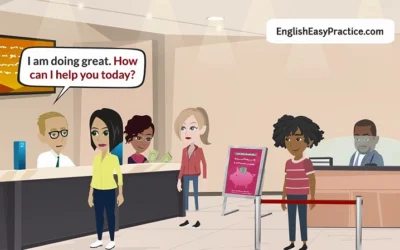
- Lisa: Hi, Mark. Do you have the report for the Wilson project?
- Mark: Not yet. I’m still waiting for the sales numbers. I asked Tom yesterday.
- Lisa: Okay. We need that report by 4 p.m. today.
- Mark: I know. I’ll call Tom again. Hang on. I think he just sent me an email.
- Lisa: Really? What did he say?
- Mark: He says he’ll send the numbers in an hour.
- Lisa: All right. In the meantime, can you start working on the introduction?
- Mark: Sure, I can do that. If I get the numbers soon, I’ll finish the report on time.
- Lisa: Good. Let me know if anything changes.
- Mark: Will do. I’ll get back to you once I hear from Tom again.
- Lisa: Thanks, Mark. I appreciate it.
In the meantime
During the time before something else happens. I’m cooking dinner. In the meantime, can you set the table? At work it’s perfect for keeping things moving while you wait.
Hang on
Wait a short time. Hang on. I need to check my calendar. It’s friendly and quick. A slightly more formal version is Just a moment.
I’ll get back to you
I will contact you again later with more information. I’m not sure about the price. I’ll get back to you after I check. This is one of the most useful work phrases in English. It lets you avoid answering immediately, politely and professionally.
Hear from
Get a message, call, email or text from someone. I’m waiting to hear from my friend about the party. At the end of emails you’ll often see: I look forward to hearing from you.
Casual or Professional? A Quick Comparison
Did you notice that “hang out” and “hang on” look similar but mean very different things? Small words after a verb change everything. Here’s how the two conversations sound different:
- Friends: Come on! / Honestly… / You convinced me. / So, it’s a plan.
- Colleagues: Not yet. / Let me know if anything changes. / Will do. / I appreciate it.
“Will do” is a short, friendly way to say “I will do that” at work. Try using it the next time someone asks you for something.
Your turn: what are your plans this weekend? Write one sentence in the comments with “hang out” or “grab a bite”.
Keep Practising
Answer the questions in each lesson out loud, like “Why didn’t Mark have the report?” or “What time does Lisa need the report?” Then shadow both speakers. If the work conversation felt familiar, you might also like “Too much on my plate”: how to say you’re overwhelmed. For another everyday situation, try joining a gym in English.
The Shadowing English Speaking Course has 60 conversations like these, from casual chats to work situations, as MP3 audio and PDF text. Download a free sample lesson and try one today.
Frequently Asked Questions
What is the difference between “hang out” and “hang on”?
“Hang out” means spend relaxed time with friends. “Hang on” means wait a moment. “Let’s hang out on Saturday.” / “Hang on, I’ll check.”
Is “I’ll get back to you” polite?
Yes. It is polite and very common at work. It means you will reply later when you have more information.
What does “grab a bite” mean?
It means to get a quick, simple meal or snack. “Let’s grab a bite before the movie.”
Can I say “chilling” at work?
Only in a relaxed chat with colleagues. In formal situations, say “relaxing” or “resting” instead.