Key takeaways
- Sophie tells Ryan a funny story from her trip: everyone in a café thought she was a famous actress.
- Five storytelling phrases: You’re not going to believe this, Picture this, Out of nowhere, Get this and Don’t leave me hanging.
- A good story has a hook, a scene, a surprise and a reaction. These phrases mark each step.
- The lesson has listening, vocabulary, listen-and-answer and shadowing parts. Speak out loud every time.
Have you ever started telling a funny story in English and watched people lose interest halfway through? The story was great. The way you told it… felt flat. You didn’t have the right words to build excitement.
It’s not about grammar or big vocabulary. Native speakers use a few small, powerful phrases that say “Listen! Something good is coming!” Once you know them, even a simple story sounds lively. In this lesson, you’ll hear Sophie use all of them while she tells her friend Ryan the strangest thing that happened on her trip.
Watch the Lesson
Lesson map: listening (01:50), vocabulary (06:10), listen and answer (09:41), shadowing (17:26).
The Story: Sophie, the “Famous Actress”
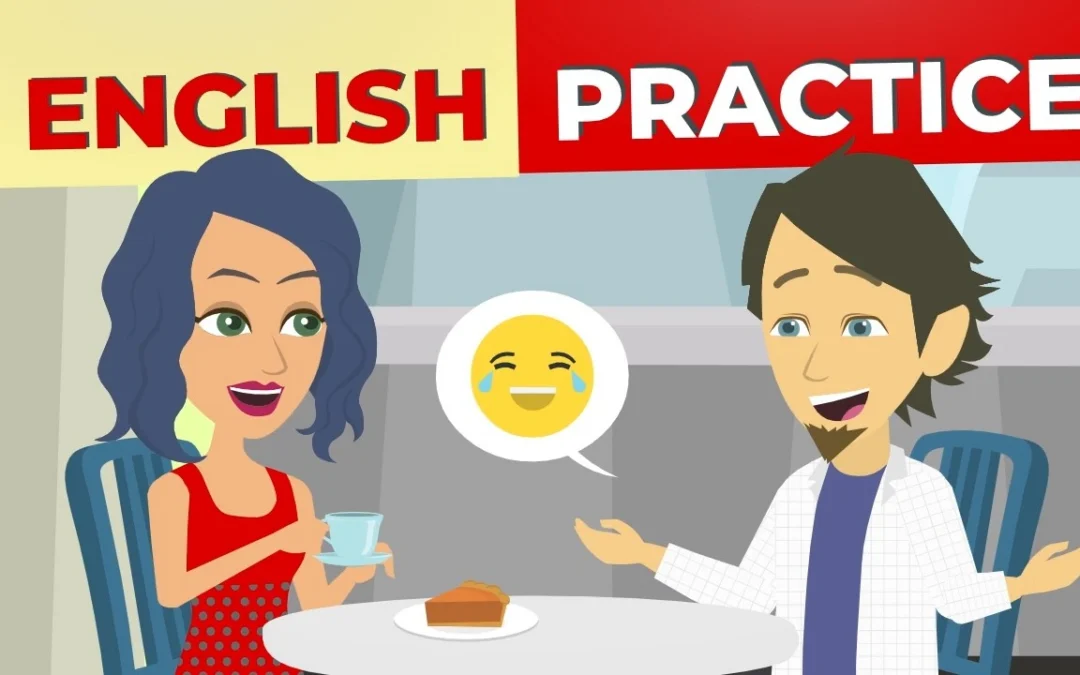
Sophie and Ryan are sitting in a café. Sophie has just come back from a trip. Here are the key lines of the conversation:
- Ryan: So, how was your trip, Sophie? Did anything interesting happen?
- Sophie: Ryan, I am so glad you asked. You are not going to believe this. It was the most unexpected thing that has ever happened to me.
- Ryan: Oh wow. Now I need to know everything. Start from the beginning.
- Sophie: Okay. So, picture this. It was my last day in the city. I was sitting alone in a small café, drinking coffee and reading my book.
- Ryan: Okay, sounds peaceful. Then what?
- Sophie: Then, out of nowhere, a man sat down at my table. Right across from me. He smiled and said, “I’m sorry. Are you waiting for someone famous?” Then he pointed to the door.
- Ryan: Don’t leave me hanging. What was at the door?
- Sophie: There was a huge crowd of people outside, all looking through the window at me. Here’s the best part. I was sitting in the exact seat where a very famous actress always sits. Everyone thought I was her!
- Ryan: That is absolutely incredible. What did you do?
- Sophie: Get this. I didn’t say anything. I just smiled, waved at the crowd and finished my coffee. And the waiter brought me a free slice of cake.
- Ryan: That is the best story I have heard all year. Please tell me you took a photo.
5 Phrases for Telling a Great Story
1. You’re not going to believe this
Your opening hook. It tells the listener that something surprising is coming, so they lean in. You’re not going to believe this. I just won a free holiday!
2. Picture this
Ask the listener to imagine the scene, like a movie in their head. Picture this: a cold winter morning, and I’m late for work. After “picture this”, describe the place and the time with short sentences.
3. Out of nowhere
Something happens suddenly and completely unexpectedly. I was walking home and, out of nowhere, it started raining heavily. This is the moment the story turns.
4. Get this
Use it right before the most surprising detail. It means “Listen carefully, this part is hard to believe.” And get this: it was my boss who made the mistake, not me. Similar: Here’s the best part.
5. Don’t leave me hanging
This one is for the listener. Say it when the storyteller stops at an exciting moment. Come on, don’t leave me hanging. Did you get the job? It shows you’re really interested, and good listeners are just as important as good storytellers.
The Shape of a Good Story
Look at how Sophie’s story moves. You can use the same four steps for almost any story:
- Hook: You’re not going to believe this…
- Scene: Picture this. It was… I was… (past continuous for the background: I was sitting, I was reading)
- Surprise: Out of nowhere… / Get this… (past simple for the action: a man sat down)
- Ending: So in the end… / And the best part is…
Notice the grammar in step 2 and 3: past continuous sets the scene, past simple moves the story forward. You don’t need to think about rules if you copy Sophie’s sentences. The pattern comes with them.
Your turn: think of something funny or strange that happened to you. Tell it in four sentences using at least two phrases from this lesson, and post it in the comments. We’d love to read it!
Listener Phrases Are Half the Conversation
Ryan doesn’t say much, but his short reactions keep the story alive: Oh wow. Then what? Wait, a stranger just sat at your table? No way. That is absolutely incredible. Learn a few of these and you’ll be a much better conversation partner. “No way” is one of the phrases in 10 real English phrases native speakers use every day.
Stories are one of the best ways to learn English in general. If you enjoy them, read storytelling to learn English speaking or listen to a calmer travel conversation in talk about a trip in English.
Practise It
In the listen-and-answer part you’ll hear questions like “Why were the people outside looking at Sophie?” and “What did the waiter bring Sophie?” Answer each one out loud. Then shadow Sophie’s lines, and really try to copy her excitement. Storytelling is about energy as much as words.
For 60 more real conversations with the same listen, answer and shadow steps, see the Shadowing English Speaking Course (MP3 + PDF), or download a free sample lesson.
Frequently Asked Questions
How do I start a story in English?
Use a hook like “You’re not going to believe this” or “Guess what happened yesterday,” then set the scene with “Picture this…” or “So, I was…”.
What does “out of nowhere” mean?
It means suddenly and completely unexpectedly. “Out of nowhere, a dog ran into the café.”
What does “Don’t leave me hanging” mean?
It means “Please don’t stop now, tell me what happened next.” Listeners say it when they are curious about the end of a story.
Which tenses do I use to tell a story?
Mostly the past continuous for the background (“I was sitting in a café”) and the past simple for the main events (“a man sat down”).