Key takeaways
- Sarah lost her job this morning. Her close friend Mark comforts her with simple, caring words.
- Six phrases: hold it together, find out, let it out, see it coming, figure it out and coming right up.
- Comforting someone has a simple pattern: notice, show sympathy, accept their feelings, offer support, give hope.
- Emotional moments need fast words. Practise these lines out loud so they’re ready when you need them.
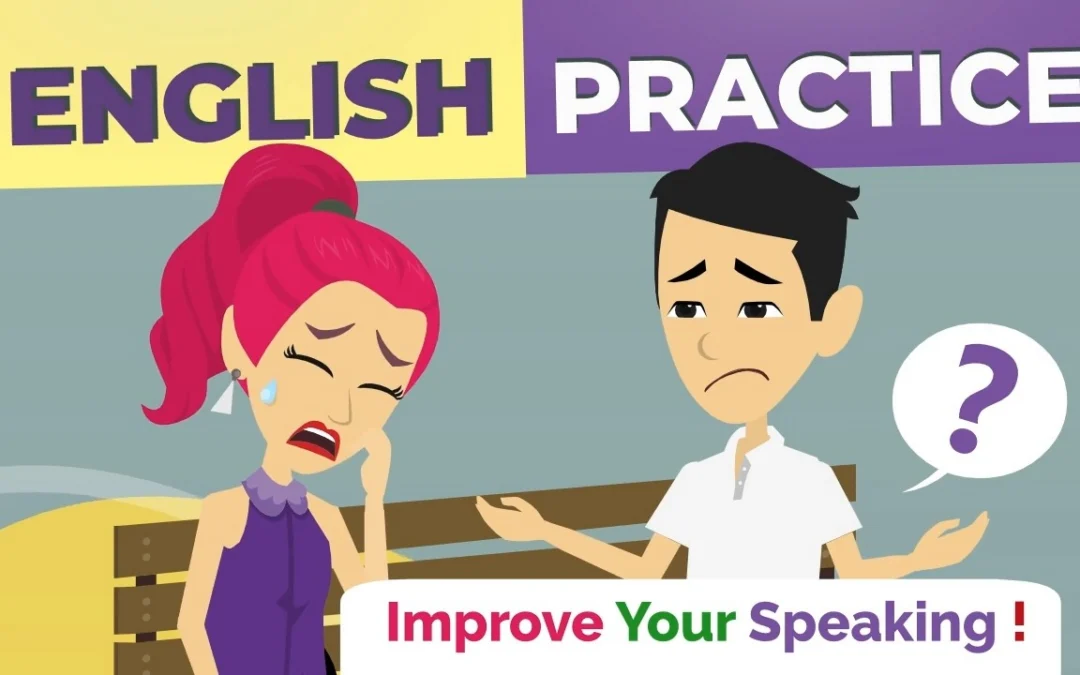
Imagine this: a friend comes to you with red eyes. They’re upset, and they start to cry. You want to say something kind, something that helps. But in English, the words just don’t come. So you say nothing, and afterwards you feel terrible.
This is one of the hardest moments for English learners. In emotional situations, there’s no time to think about grammar. You need the right words, fast. This lesson gives you those words, in a real, gentle conversation between two friends.
Watch the Lesson
Lesson map: listening (01:51), vocabulary (04:43), listen and answer (09:04), shadowing (15:41).
The Conversation: “Hold It Together”
- Mark: Hey Sarah. Are you okay? You don’t look like yourself today.
- Sarah: Sorry, Mark. I’m trying to hold it together. But I found out this morning I lost my job.
- Mark: Oh, Sarah. I’m so sorry. That must be really hard for you. It’s okay to cry. Let it out.
- Sarah: I just didn’t see it coming. I worked so hard. And now I don’t know what to do.
- Mark: I hear you, Sarah. And I understand why you feel this way. Anyone in your situation would feel the same.
- Sarah: I just feel so lost right now.
- Mark: That makes complete sense. But please know you are not alone in this. I am right here with you.
- Sarah: Thank you, Mark. I really needed to hear that.
- Mark: Take all the time you need. There is no rush. And when you are ready, we will figure this out together, okay?
- Sarah: Okay. Thank you for being here. I feel a little better already.
- Mark: You are strong, Sarah. And this is not the end. Things will get better. I promise.
- Sarah: I hope so. You always know what to say, Mark.
- Mark: That’s what friends are for. Now, can I make you a cup of tea?
- Sarah: Yes, please. That would be really nice.
- Mark: Coming right up.
Six Phrases, Explained
Hold it together
Stay calm and control your feelings, even when you’re very sad or stressed. I felt nervous before my speech, but I held it together.
Find out
Learn new information you didn’t know before. I found out that my friend is moving to another city. When did you find out about the meeting?
Let it out
Don’t hide your feelings; cry if you need to. Don’t hold back. Just let it out. It’s something kind you say to a person who is upset.
See it coming
Expect something before it happens. Usually negative: I didn’t see it coming = it was a complete surprise. The rain started suddenly. Nobody saw it coming.
Figure it out
Find a solution to a problem by thinking carefully. I don’t know the answer yet, but I’ll figure it out. Mark says “we’ll figure this out together”, and that one word makes it very comforting.
Coming right up
“I’ll bring it for you right now.” You hear it in cafés and restaurants, but friends use it too, often with a smile. It’s a lovely, light way to end a heavy moment.
The 5-Step Pattern for Comforting Someone
Mark’s words follow a clear pattern. Learn one sentence for each step and you’ll be ready for any difficult moment:
- Notice: Are you okay? You don’t look like yourself today.
- Show sympathy: I’m so sorry. That must be really hard for you.
- Accept their feelings: I hear you. Anyone in your situation would feel the same. That makes complete sense.
- Offer support: You are not alone in this. I’m right here with you. Take all the time you need.
- Give hope: We’ll figure this out together. Things will get better.
Notice what Mark doesn’t say. He doesn’t say “Don’t cry” or “It’s not a big deal.” For small problems, “It’s not a big deal” is kind. For a lost job, it would feel cold. Choosing the right phrase for the right moment is a big part of sounding natural, and of being a good friend.
A question for you: which of Mark’s sentences would you most like to remember? Write it in the comments. Writing it once helps it stay with you.
Practise Now, So the Words Are Ready Later
Emotional phrases are exactly the kind you should practise before you need them. Shadow Mark’s lines slowly and warmly. Then answer the questions in the video out loud, like “When did Sarah find out about her job?” and “Did Sarah see it coming?”
If you want to practise the other side, being the one who needs support, our lesson “Come Across As”: your first day at work is a great match. And for another emotional story with lots of surprise, try how to tell a story in English.
For 60 more real-life conversations with MP3 audio and PDF text, see the Shadowing English Speaking Course, or download a free sample lesson.
Frequently Asked Questions
What can I say to comfort someone in English?
Simple phrases work best: “I’m so sorry.” “That must be really hard.” “I’m here for you.” “Take all the time you need.” “We’ll figure this out together.”
What does “hold it together” mean?
It means staying calm and in control of your emotions, even in a very difficult moment.
What does “I didn’t see it coming” mean?
It means something happened that you did not expect at all. It was a complete surprise.
What does “coming right up” mean?
It means “I’ll bring it to you right away.” Waiters say it, and friends use it in a friendly, light way.