Key takeaways
- A short beginner conversation: Sarah tells Alex about her biggest ambition, opening a small coffee shop.
- Three expressions: ambition, ambitiously and come true.
- Useful patterns for your own goals: My biggest ambition is to…, I’m working on…, I won’t give up.
- The video has listening, vocabulary, listen and repeat, listen-and-answer and shadowing practice. Watch it every day for a week.
What is your biggest ambition this year? Maybe it’s a new job, a trip, or finally speaking English with confidence. Now try to answer that question in English, out loud. Not so easy, right?
Talking about goals and dreams is one of the most common topics in real conversations. People ask about it at work, in job interviews, on first dates and in English exams. In this lesson, you will hear Sarah talk about her dream with her friend Alex, and then you will practise saying the same sentences until they feel natural.
Watch the Lesson
The first time, just listen and try to follow the story. What does Sarah want? Why is it difficult? Then read the script below and listen again.
The Conversation: Sarah’s Coffee Shop Dream
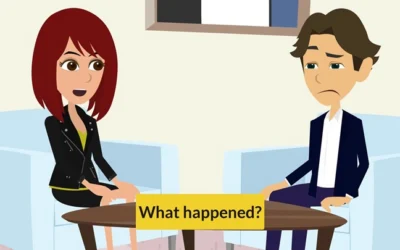
- Alex: So, Sarah, what is your biggest ambition for this year?
- Sarah: My biggest ambition is to open a small coffee shop. It’s a lot of work, but I really want to do it.
- Alex: That’s a great goal, but it sounds very hard. You need money, a good location, and a lot of time.
- Sarah: I know. That’s why I am working ambitiously right now. I work at a café in the morning, and I take business classes at night.
- Alex: Wow, you are really serious about this.
- Sarah: Yes, I am. I want to be my own boss. I know it will take time, but I won’t give up.
- Alex: That’s great. I hope your dreams come true.
- Sarah: Thanks, Alex. I hope so, too.
Short, simple, and full of sentences you can borrow. Let’s look at the key words.
Vocabulary: Ambition, Ambitiously, Come True
Ambition (noun)
A strong wish to do or achieve something. My ambition is to become a doctor. His ambition is to speak English well. You will often hear it as “my biggest ambition” or “my main ambition”.
Ambitiously (adverb)
In a way that shows you really want to reach a goal and are ready to work hard for it. She works ambitiously to reach her goals.
Here is a small family of words worth knowing together:
- ambition (noun): Her ambition is to travel the world.
- ambitious (adjective): She is a very ambitious person.
- ambitiously (adverb): She works ambitiously.
Learning words in families like this means you learn three words for the price of one.
Come true
When something you wish for really happens. I hope my dream comes true. Her wish came true yesterday. We almost always use it with dream or wish. A very common, warm reply is the one Alex uses: “I hope your dreams come true.”
Your turn: what is your biggest ambition? Write one sentence in the comments with “My biggest ambition is…” or “ambitiously”. For example: My biggest ambition is to become a confident English speaker. Every sentence you write is practice.
How to Talk About Your Own Goals in English
Sarah’s lines work for almost any goal. Change a few words and they become yours:
- Say the goal: My biggest ambition is to open my own business / pass my IELTS exam / move abroad.
- Admit it’s hard: It’s a lot of work, but I really want to do it.
- Explain your plan: That’s why I’m taking classes at night / saving money / practising every morning.
- Show you’re serious: I know it will take time, but I won’t give up.
Notice the grammar too: ambition is + to + verb (to open, not opening), and present continuous for what you are doing these days (I’m working ambitiously right now). You don’t need to memorise a rule; just say these sentences many times and the pattern stays with you.
This topic also comes up in job interviews. If you have one coming, our lesson on preparing for a job interview in English pairs well with this one.
How to Practise With This Video
- Listen to the conversation without stopping. Focus on the main idea.
- Learn the words in the vocabulary part and make one example about yourself for each.
- Listen and repeat. Each sentence comes twice, slowly and then at normal speed. Copy the rhythm.
- Answer the questions out loud, like “Where does Sarah work in the morning?” Pause the video if you need more time.
- Shadow the speakers, line by line, until you can say Sarah’s part without looking.
Why the same video for a whole week? Because one conversation that you know really well gives you sentences you can actually use. A new video every day often just gives you a feeling of progress. If daily practice is the hard part, read our article on the learning English habit that changes everything.
Keep Going
Like Sarah, you don’t need to be perfect. You just need to keep going. Want more natural phrases for everyday chats? Try 10 real English phrases native speakers use every day.
And if you want a full set of lessons like this one, the Shadowing English Speaking Course has 60 everyday conversations as MP3 audio and PDF text, with the same listen, answer and shadow steps. Download a free sample lesson to try it.
Frequently Asked Questions
What is the difference between ambition and ambitious?
“Ambition” is a noun: your goal or strong wish. “Ambitious” is an adjective that describes a person who has big goals. “My ambition is to start a business.” / “She is very ambitious.”
How do I use “come true” correctly?
Use it with a dream or a wish as the subject: “My dream came true.” “I hope your wish comes true.” Don’t say “I came true my dream.”
How do I answer “What is your biggest ambition?” in English?
Start with “My biggest ambition is to…” plus a verb, then add one sentence about your plan: “My biggest ambition is to work abroad. That’s why I’m practising English every day.”
What level is this lesson?
It is made for beginner and elementary learners (A2–B1). The sentences are short and the questions are easy.