Key takeaways
- Emma wants to visit her grandmother after work and invites Jake. They plan the time, a stop at the shop and a walk in the park.
- Drop by = visit a person for a short time. Stop by = go to a place briefly on your way somewhere else. Pick someone up = collect someone in your car.
- Useful planning phrases: Do you have any plans after work? / What time should we go? / Then it’s a plan. / See you then.
- Beginner level, about 21 minutes with repeat, answer and shadowing parts.
When did you last visit someone “just to say hello”? No big plan, no special reason, just a short visit with a cup of tea. English has a couple of very natural phrasal verbs for exactly that kind of visit, and many learners mix them up.
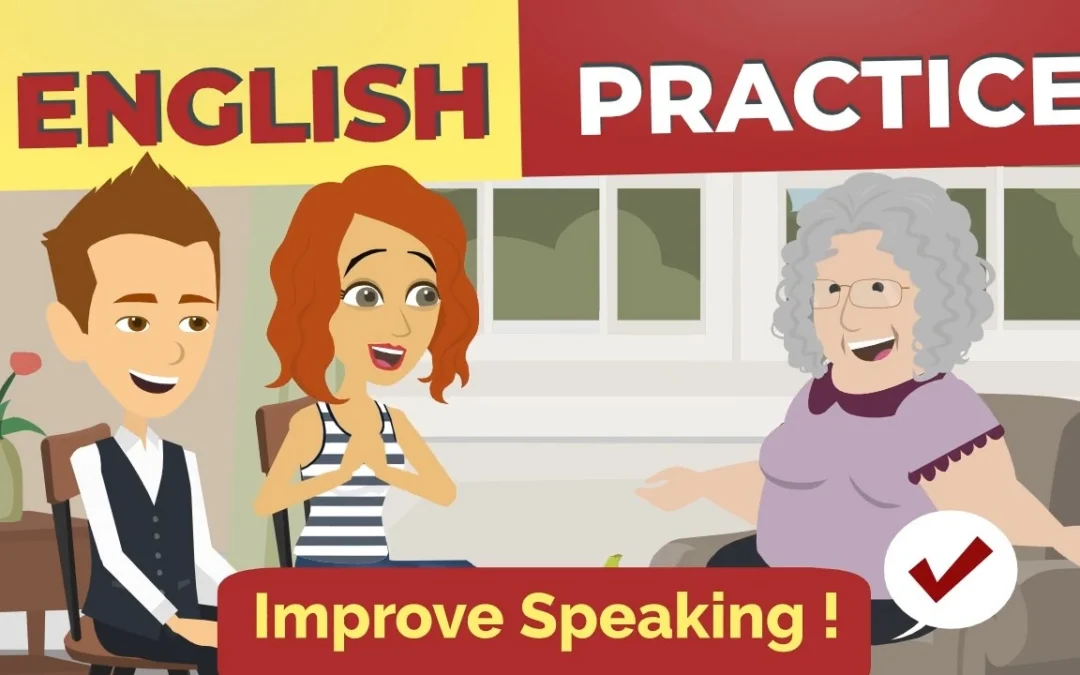
In this warm, simple conversation, Emma and Jake plan a quick visit to Emma’s grandmother. Along the way you’ll learn drop by, stop by and pick someone up, three phrasal verbs that native speakers use every single day.
Watch the Lesson
Lesson map: listening (01:14), vocabulary (03:05), listen and repeat (05:06), speaking practice (10:53), shadowing (16:19).
The Conversation: A Visit to Grandma
- Emma: Hi, Jake. Do you have any plans after work today?
- Jake: Not really. Why?
- Emma: I want to visit my grandmother. Do you want to drop by her house with me?
- Jake: Sure. I haven’t seen her for a long time. She always makes delicious cookies.
- Emma: She’ll be happy to see you. We don’t have to stay long. We can just say hello and have some tea.
- Jake: Sounds good. What time should we go?
- Emma: Around 6:00. She usually finishes dinner by then.
- Jake: Great. Before we go, I need to stop by the grocery store. I want to buy some fresh fruit for her.
- Emma: That’s very kind of you. She loves apples and oranges.
- Jake: Perfect. I’ll buy those.
- Emma: Thanks. After we visit her, we can walk in the park if the weather is nice.
- Jake: I like that idea. It’s been a busy week, and a relaxing walk sounds perfect.
- Emma: Then, it’s a plan. I’ll pick you up at 5:45.
- Jake: See you then. I’m looking forward to visiting your grandmother.
Drop By vs Stop By: What’s the Difference?
Drop by
To visit someone for a short time, usually without staying long. Sometimes the visit isn’t planned. I will drop by your house after work. My friend dropped by to say hello.
Stop by
To go to a place for a short visit before going somewhere else. I need to stop by the bank this afternoon. We stopped by the supermarket on our way home.
In everyday English they are very similar, and you’ll hear both used in both ways. But here’s the simple rule the lesson gives you:
- drop by → more often for visiting a person
- stop by → more often for a place, on the way to somewhere else
One sentence with both: My friend dropped by to see me, and then we stopped by a coffee shop. A third option you’ll hear is pop in or pop by, which is very common in British English.
Pick someone up
To go somewhere in your car and collect someone. I’ll pick you up at 6 p.m. My father picked me up from school. Watch the word order with pronouns: pick you up, pick her up (not “pick up you”). The opposite is drop someone off: Can you drop me off at the station?
Quick practice: write a sentence in the comments using “stop by” and “pick up”. For example: I’ll stop by the bakery and then pick you up at 8.
Making Plans: The Conversation Pattern
This dialogue is a perfect template for making simple plans with a friend:
- Check if they’re free: Do you have any plans after work? – Not really. Why?
- Invite: Do you want to drop by… with me?
- Agree on time: What time should we go? – Around 6:00.
- Add details: Before we go, I need to… / After that, we can…
- Confirm: Then it’s a plan. I’ll pick you up at 5:45. – See you then.
Notice “around 6:00”. It means “approximately”, and it’s how people usually talk about casual times. And “I’m looking forward to…” is always followed by a noun or an -ing verb: looking forward to visiting, not “to visit”.
Want more weekend and plan-making English? Try weekend plans and a work deadline, or our older lesson on daily routine activities in English.
Practise With the Video
Answer the questions out loud, such as “Did Jake need to stop by the pharmacy first?” and “Why did Jake want to stop by the grocery store?” Using the phrasal verbs in your own answers is the fastest way to make them yours. Then shadow both speakers.
The Shadowing English Speaking Course has 60 everyday conversations full of phrasal verbs like these, with MP3 audio and PDF text. Drop by our free sample lesson to try one.
Frequently Asked Questions
What is the difference between “drop by” and “stop by”?
Both mean a short visit. “Drop by” is used more for visiting a person; “stop by” more for going to a place on your way somewhere else. In everyday speech they are often interchangeable.
Is it “pick up you” or “pick you up”?
“Pick you up.” With pronouns (me, you, him, her, them), the pronoun goes between “pick” and “up”.
What is the opposite of “pick someone up”?
“Drop someone off”: to take someone somewhere in your car and leave them there. “I’ll drop you off at school.”
Do I need an invitation to drop by?
Not always. “Drop by” often means a casual, short visit. With people you don’t know well, it’s polite to send a message first.