
Key takeaways
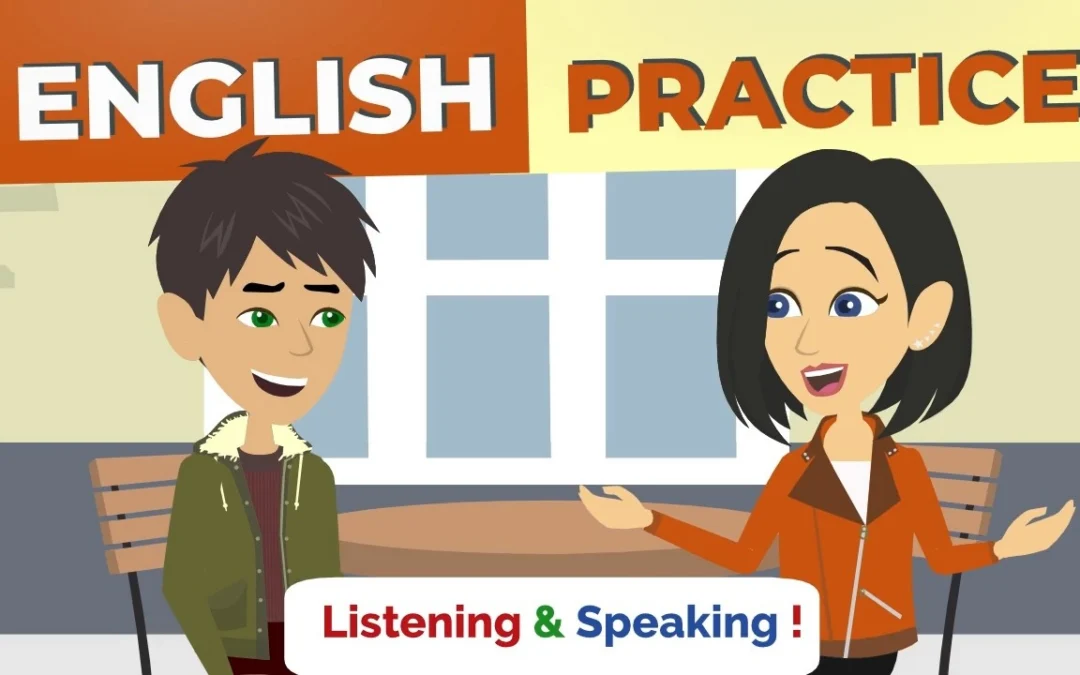
- A short everyday conversation: Anna helps her friend Mark get ready for his job interview tomorrow.
- Three useful expressions: anticipate, look up and I’ll do my best.
- The video has 5 steps: listening, vocabulary, listen and repeat, listen-and-answer speaking practice and shadowing. It is made for A2–B1 learners.
- Watch it once a day for a week and always speak out loud. Small and often beats long and rare.
Has this ever happened to you? Someone asks you a simple question in English, you know the answer… and your mind goes completely blank. Now imagine that happening in a job interview.
Mark knows that feeling. His interview is tomorrow. He has been preparing all week, and he is still a little nervous. In this lesson, you listen to Mark talk it through with his friend Anna. Then you say the same sentences yourself, again and again, until they feel like your own.
The conversation is short: less than a minute. But by the end of the video you will have heard it, repeated it, answered questions about it and shadowed it. That is the whole idea. One small piece of English that you use many times stays in your head much longer than a long text you read once.
Watch the Lesson: Learn English Through a Daily Conversation
First time? Just press play and listen. Don’t stop the video and don’t worry about every word. Try to follow the main idea. We will look at the details below.
What Happens in the Conversation?
Anna asks Mark if he is ready for his interview. Mark says he is almost ready, but nervous. He can’t guess every question, but he thinks they will ask about his experience and skills. He has prepared some answers and found information about the company. Anna gives him one more tip, and Mark already has a good answer for it. Here is the full script, so you can read along the second time you listen:
- Anna: Hey Mark, are you ready for your job interview tomorrow?
- Mark: Almost. I’ve been preparing all week, but I’m still a little nervous.
- Anna: That’s normal. Do you know what questions they might ask?
- Mark: I can’t anticipate every question, but I think they’ll ask about my experience and skills.
- Anna: That makes sense. Have you prepared some answers?
- Mark: Yes. I also looked up some information about the company.
- Anna: Good idea. You should also anticipate some questions about why you want the job.
- Mark: I already have an answer for that. I really like their work, and I think I can learn a lot there.
- Anna: Great. Just stay calm and speak clearly.
- Mark: Thanks, I’ll do my best. I hope everything goes well.
- Anna: I’m sure you’ll do great.
3 Expressions to Take From This Dialogue
1. Anticipate
Anticipate means to think about something that may happen in the future and get ready for it. It sounds a little more formal than “expect”, so it fits very well in work situations like meetings and interviews.
- I anticipate a busy day tomorrow.
- We anticipate many questions in the meeting.
- You should anticipate some questions about why you want the job.
In everyday chat, most people simply say “expect” or “think … will happen”. Use “anticipate” when you want to sound a bit more professional.
2. Look up
Look up means to search for information in a book, on the internet or somewhere else. It is a phrasal verb, and here is the small trap: when you use it or them, the word goes in the middle.
- She looked up information about the company.
- I don’t know this word. I’ll look it up. (not “look up it”)
Learning phrases like this as one piece, instead of two separate words, is one of the fastest ways to grow your vocabulary. We explain why in Learn Phrases, Not Words.
3. I’ll do my best
I’ll do my best means you will try as hard as you can. It is a perfect reply when someone wishes you luck or asks you to do something difficult. It sounds more positive and more confident than a simple “I’ll try”.
- “Good luck tomorrow!” – “Thanks, I’ll do my best.”
- I’ll do my best to finish the work today.
Quick challenge: can you make one sentence with “anticipate” right now? Think about something you expect to happen this week. For example: I anticipate making progress by practising English every day. Write your sentence in the comments below. Mistakes are welcome; that is how we learn.
How to Practise With the Video, Step by Step
The lesson has five parts. Each one trains a different skill, so don’t skip any of them.
Step 1: Listening practice (01:07)
Listen to the whole conversation without pausing. The first time, only ask yourself: Who is talking? What is the problem? The second time, read the script above while you listen.
Step 2: Vocabulary (03:17)
Here you get the meaning and two examples for each expression. Pause after each example and say it out loud. Then change one word to make it about your own life.
Step 3: Listen and repeat (04:38)
You hear every sentence two times: first slowly, then at normal speed. Repeat after each one. Copy the rhythm and the intonation, not just the words. Notice how “I’ve been preparing” sounds almost like one word when people speak fast.
Step 4: Listen and answer (09:57)
This is the speaking part. You hear easy questions like “Was Mark ready for his job interview?” or “What information did Mark look up?” Answer out loud before you hear the answer. If you need more time, pause the video. That’s not cheating, it’s practice.
Did you notice something interesting in the answers? Mark says “I’ve been preparing all week”, and the answer says “He had been preparing all week.” Mark says “I can’t anticipate every question”, and the answer says “He couldn’t anticipate every question.” Without one grammar rule, you are practising how English changes when we tell someone what another person said. This is how grammar becomes natural: you hear it and use it many times. (We wrote more about this in Speak English Fluently Without Studying Grammar Rules.)
Step 5: Shadowing (14:31)
Finally, you speak together with Anna and Mark, line by line. Try to match their speed, their pauses and their pronunciation. It feels strange at first. After a few days, it feels like you are really in the conversation. If shadowing is new for you, read how shadowing improves your speaking and listening.
Why Practise One Short Conversation So Many Times?
Good question. Isn’t it better to listen to something new every day?
Not really. Your brain needs to meet a phrase many times before you can use it without thinking. When you hear the same dialogue for a week, you stop translating, and the sentences start to come out by themselves. That is also the first step to thinking in English.
Here is a simple 7-day plan for this lesson:
- Day 1: Watch the whole video. Read the script while you listen.
- Day 2: Focus on the three expressions. Make two sentences of your own with each one.
- Days 3–4: Do the listen-and-repeat and listen-and-answer parts. Try to answer faster each day.
- Days 5–6: Shadow the conversation. Then try it without the video.
- Day 7: Record yourself as Mark (or Anna) and listen back. You will hear the difference.
Fifteen minutes a day is enough. If finding those fifteen minutes is the hard part, our article on the learning English habit that changes everything can help.
Do You Have a Real Interview Coming Up?
Then use Mark’s sentences as a starting point. His answer to “Why do you want this job?” is simple but strong: “I really like their work, and I think I can learn a lot there.” Change it to fit you. What do you like about the company? What can you learn there? What can you bring?
Write two or three short answers, say them out loud every day, and look up the company before the interview, just like Mark did. For more interview questions and useful sentences, watch our lesson on job interview English.
Want More Conversations Like This?
Our Shadowing English Speaking Course has 60 everyday conversation lessons with the same steps: listening, vocabulary, listen-and-answer practice and shadowing. Each lesson comes as MP3 audio and a PDF text, so you can practise on your phone anywhere, even without the internet.
Not sure yet? You can download a free sample lesson and try it first.
Frequently Asked Questions
What does “anticipate” mean?
It means to think about something that may happen in the future and get ready for it. For example: “I can’t anticipate every question, but I think they’ll ask about my experience.” It is a little more formal than “expect”.
How do I use “look up” with “it”?
Put “it” in the middle: “I’ll look it up.” With a normal noun, both are correct: “look up the word” or “look the word up”.
What level is this lesson?
It is made for A2–B1 learners. The conversation uses everyday words, and the questions are short and easy.
How often should I watch this video?
Once a day for about a week. Each time, do all five parts and speak out loud. Repetition is what makes the sentences automatic.
Can I download lessons like this as MP3 and PDF?
Yes. The Shadowing Course has 60 conversation lessons as MP3 audio and PDF text. You can try a free sample lesson first.




Recent Comments