
Key takeaways
- Studying grammar rules helps you write, but it doesn’t make you speak fluently. In a conversation there is no time to think about rules.
- Native speakers learn grammar by hearing correct sentences again and again, not by studying rules.
- You can do the same: listen to easy stories, learn phrases, and answer questions out loud. Grammar becomes automatic.
Did you study English grammar for years at school? Do you know the past perfect, the present continuous and all the irregular verbs, but still can’t speak quickly and easily? You are not alone, and it is not your fault. In this article you will see why grammar rules don’t make you speak, and how to learn grammar in a way that helps your speaking.
Why Grammar Rules Don’t Help You Speak
When you write, you have time. You can stop, think about the tense, check the preposition and correct your mistakes. When you speak, there is no time. Someone asks you a question and you must answer in a second. If you try to think about rules while you speak, you become slow and nervous, and you sound like a robot.
So the problem is not grammar. The problem is learning grammar only as rules, with your eyes, instead of hearing it and using it.
How Native Speakers Learn Grammar
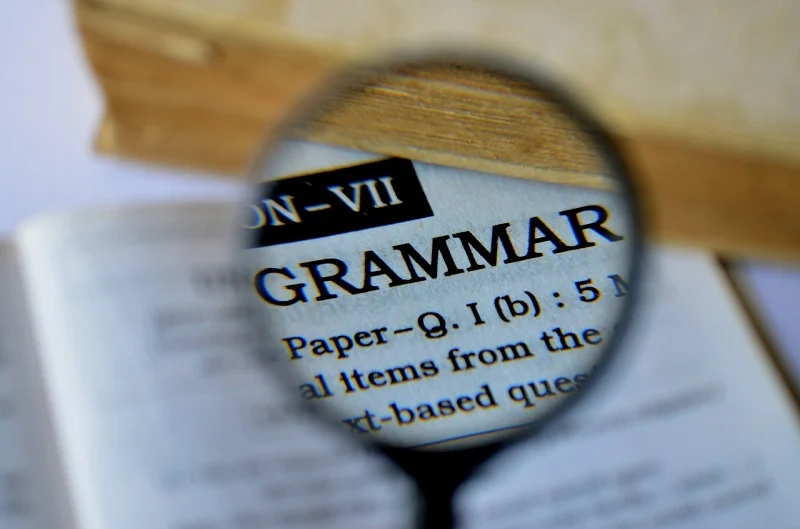 Native speakers don’t learn grammar rules before they speak. As children they hear correct sentences thousands of times. Slowly the correct forms become automatic. They study grammar rules much later, mostly for writing.
English learners can learn the same way: with a lot of easy, correct English coming in through the ears.
Focus on Meaning, Not on Rules
When you listen or speak, focus on the message: what is happening, who is doing what, what the person wants to say. Your brain learns the grammar in the background. The more correct English you hear, the more natural your own sentences become.
How to Learn Grammar Without Studying Rules
- Listen to easy stories. Choose stories where you understand almost everything. Our story lessons focus on one grammar point each, for example the present simple or the present continuous, so you hear it many times.
- Answer questions out loud. In listen-and-answer lessons you hear simple questions about the story and answer them. This trains you to use the grammar quickly, without thinking.
- Learn phrases, not single words. A phrase like “She works at a hospital” already shows the correct grammar. (See how to learn English vocabulary faster.)
- Hear the same story in different times. Some courses tell one story in the past, present and future, so you hear how the verbs change. (Effortless English uses this idea; see our short review.)
- Read easy books, not grammar books. Easy readers and short stories give you a lot of correct English in context.
Are grammar rules useless?
No. Rules can help you check your writing, prepare for exams or understand a mistake. Just don’t make them the center of your speaking practice. For speaking, listening and practice come first.
Watch more English lessons on our YouTube channel
Practise Grammar with Our Stories
The Stories Course has 21 story lessons with normal and slow audio and PDF texts. Each story focuses on one grammar point, and you answer many easy questions out loud, so you learn grammar by using it. If you want more conversation practice, the Shadowing Course has 60 real conversations with listen-and-answer and shadowing practice.
Try a free story lesson (MP3 + PDF) first.
More Learning English Tips
- How to Learn English Vocabulary Faster
- English Listening Is the Key to Speaking English Fluently
- How to Learn English Fast and Easy
- Why Is Learning English So Important?
Frequently Asked Questions
Should I stop studying grammar completely?
No. Grammar rules are useful for writing and exams. But for speaking, spend most of your time listening to easy English and practising out loud.
How can I learn English tenses without rules?
Listen to stories that use one tense many times, like our present simple story, and answer questions about them. After many repetitions, the correct forms come automatically.
Why can I write English well but not speak it?
Because writing gives you time to think about rules, and speaking doesn’t. Your speaking needs a lot of listening and practice, so the right sentences come without thinking.
Is grammar important for English exams?
Yes, many exams test grammar. Listening and story lessons still help, because you see and hear correct grammar in context, which makes exam questions easier too.







Hello A.J. Hoge. Incredible work,congratulations.
study notes kindly provide me